Clondalkin Decarbonising Zone (DZ) Map
Browse the interactive map below to explore the Clondalkin DZ area.
The Clondalkin DZ Today
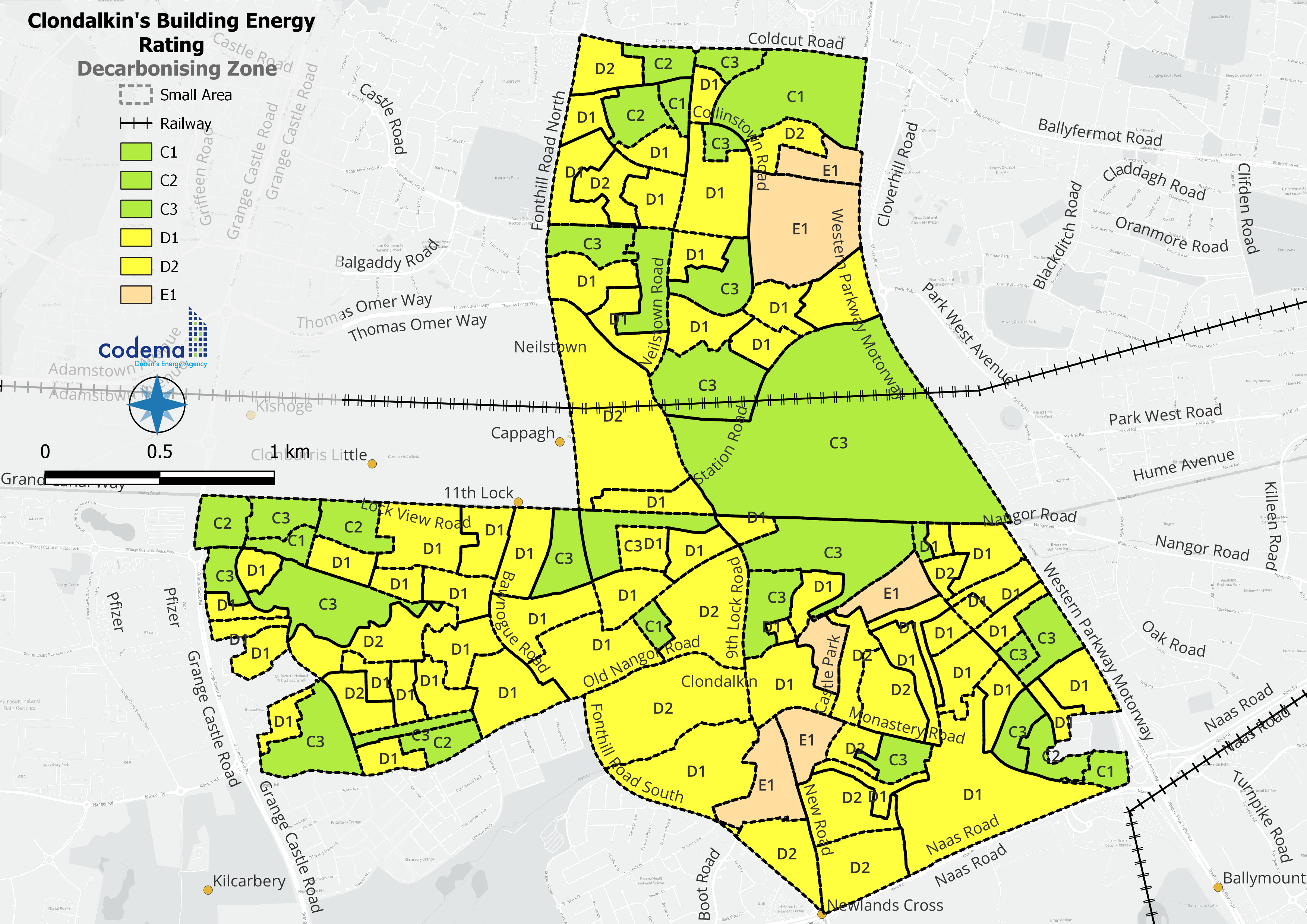
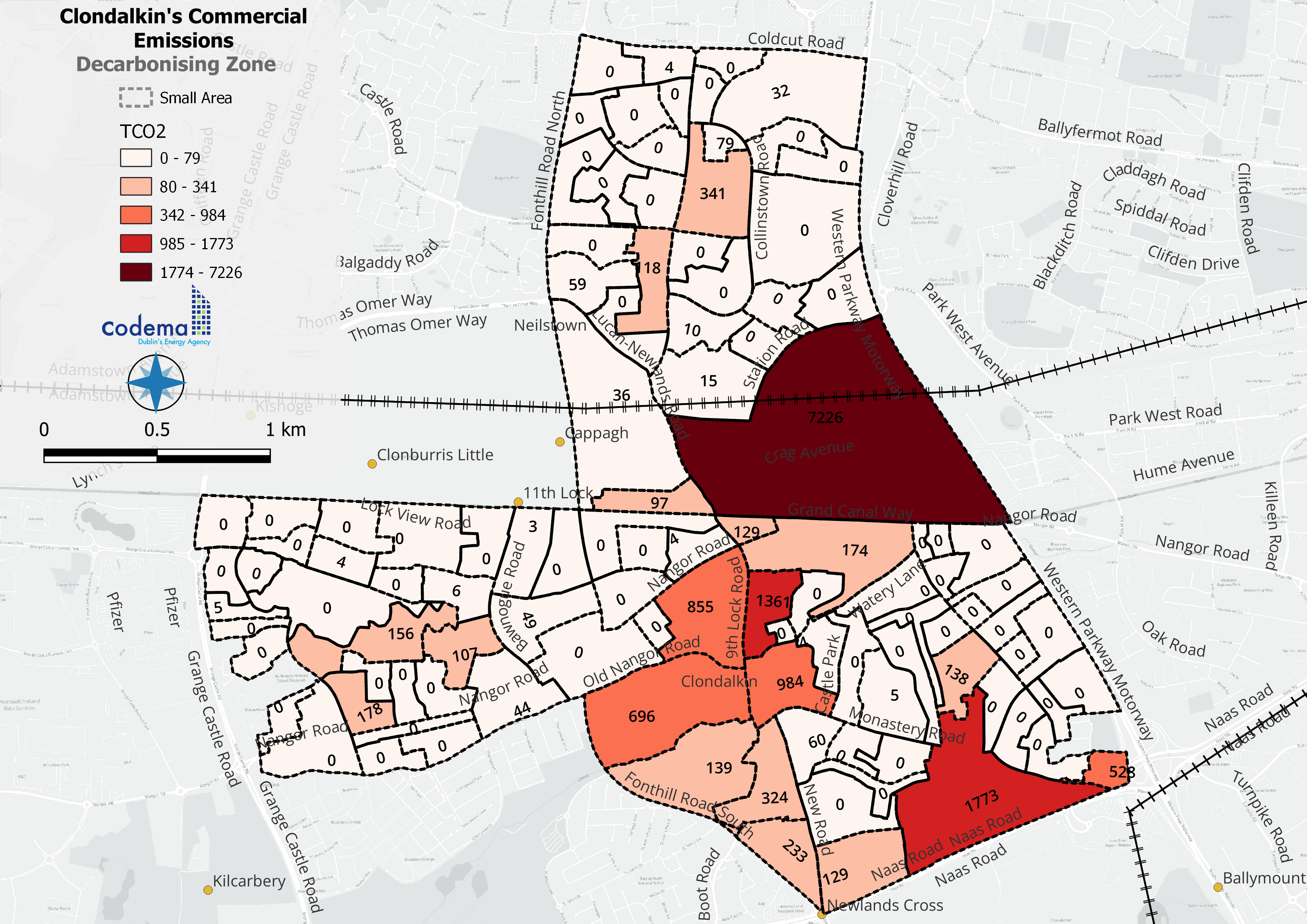
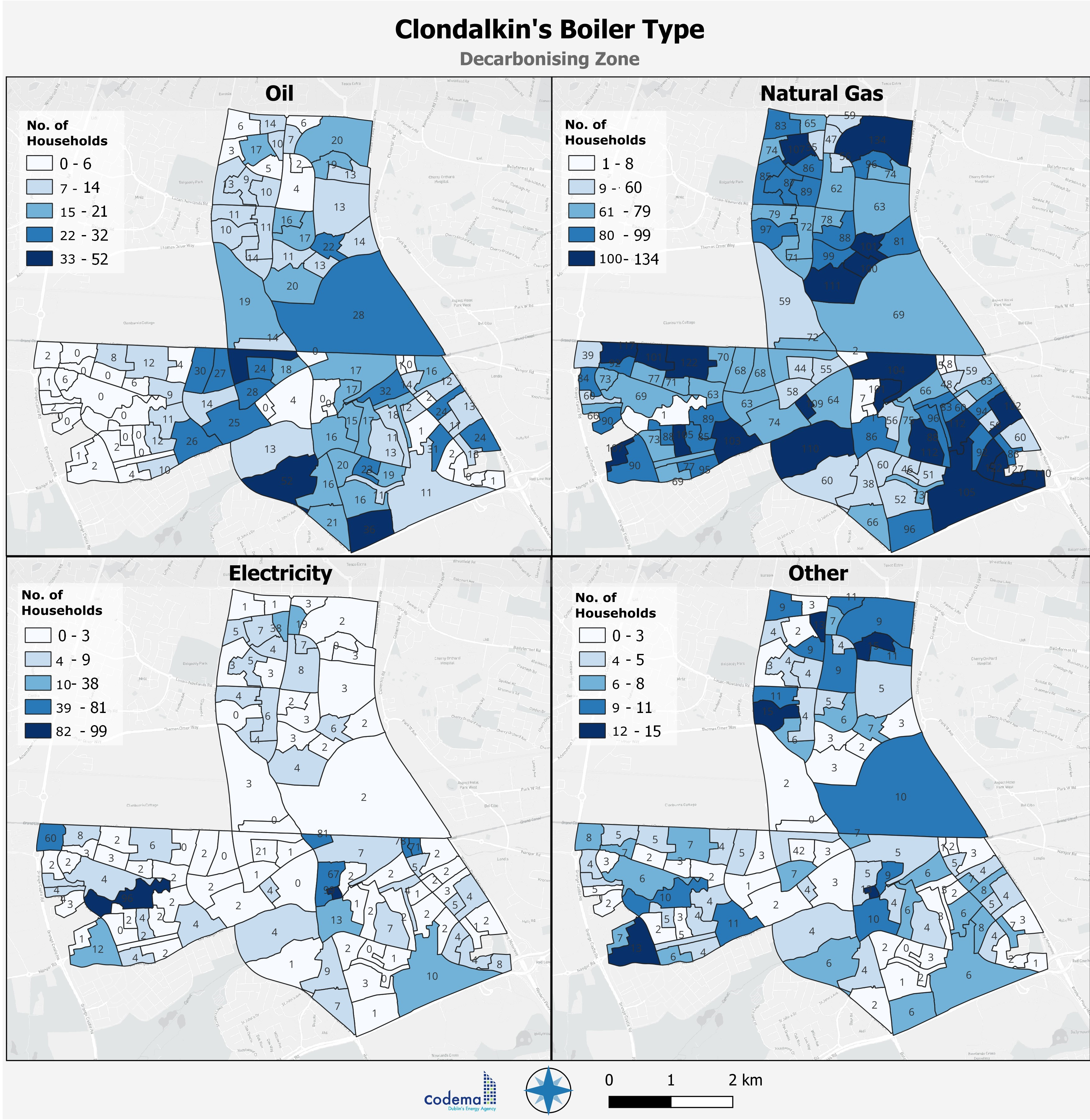
The Clondalkin DZ includes Clondalkin town centre and surrounding residential, commercial, green space and transport areas, stretching approximately broadly from the M50 in the east to Fonthill Road in the west, and from the N7/Red Cow area in the south to Coldcut Road and Liffey Valley in the north. Interact with the map above to see if you are in the Clondalkin DZ.

Why Clondalkin?
The Clondalkin DZ is a local area where communities, organisations and public bodies will work together to plan, test and deliver climate solutions. For Clondalkin, the aim is to reduce greenhouse gas emissions while creating a healthier, more connected and more resilient place to live, work, study and visit. The Clondalkin DZ aims to cut greenhouse gas emissions by 51% by 2030.
Why this matters?
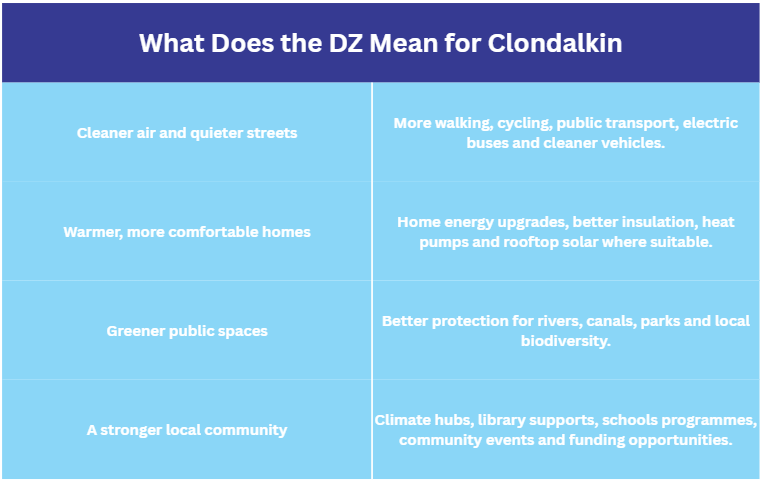
- Reducing carbon emissions can bring real and lasting benefits to local communities. In the Clondalkin Decarbonising Zone, these benefits could include cleaner air, better health, a stronger local economy, greater resilience to extreme weather and an improved quality of life.
- Lower carbon emissions help slow climate change, preserving natural resources, ecosystems, and living conditions for future residents. Communities that act today contribute to a more sustainable future for our children and grandchildren.
- South Dublin County Council is working with local communities to support and deliver positive change in Clondalkin and the surrounding area.
The plan sets out 24 opportunities for climate action in the Clondalkin DZ across several areas: community engagement, energy and buildings, transport, flood resilience, nature-based solutions, and circular economy/waste.
The 2030 Challenge
The main objective of the Clondalkin Decarbonising Zone is to find innovative but achievable ways to reduce greenhouse gas emissions from the area by 51% by 2030, based on 2018 levels (this means cutting the area’s climate pollution by more than half). The starting point is the 2018 baseline: 109,875 tonnes CO2e emitted in the zone.
We need to cut annual emissions by 56,036 tonnes CO2e to meet the 51% target.